
Inclusion should never feel extraordinary. It should just be.
In a perfect world, we’re all complaining about the same things. We’re not there yet.
Descriptive Transcript
00:01 – 00:06
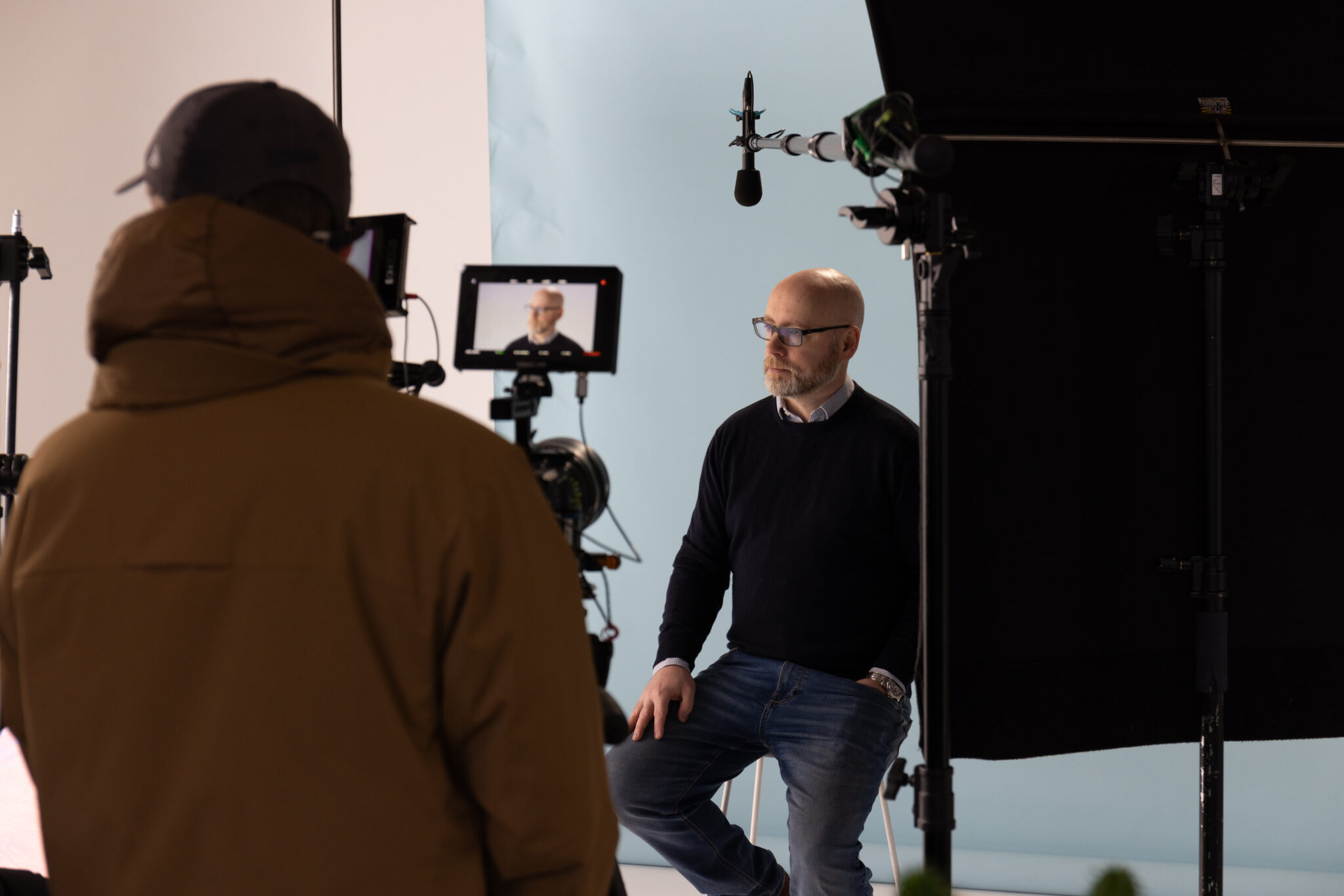
[Upbeat music plays. Background shows a film set]
[Onscreen text: In a perfect world, we’re all complaining about the same things.]
[No spoken dialogue]
00:06 – 00:11
[Upbeat music continues. Screen transition to show Oliver, a wheelchair user enters the frame. The camera zooms in on his face]
[Onscreen text: We are not there yet.]
[No spoken dialogue]
00:11 – 00:13
[Quick scene transitions. People enter one by one and sit in the chair at the centre of the set.]
<v Director>: You look very relaxed.
00:13 – 00:14
[Transition continues]
<v Celine>: I’m very nervous
00:14 – 00:17
[Transition stops with Oliver facing the camera and speaking]
<v Oliver>: Yep, sweet. Thank you.
00:18 – 00:23
[Transition continues with Maz and Elvin entering the screen one after the other]
<v Juttima>: Do I look at you guys? Hi!
00:23 – 00:25
[Quick scene transitions. People look directly at the camera.]
Oliver: “I wish…”
Maz: “I wish…”
Travis: “I wish…”
00:25 – 00:29
[Transition stops with Travis, holding a white walking stick, facing the camera and speaking]
<v Travis>: I wish the worst part of shopping was finding the right shampoo.
00:29 – 00:32
[Transition moves to Juttima, facing the camera and speaking]
<v Juttima >: I wish the worst thing about traveling is waiting in line.
00:33 – 00:36
[Transition moves to Celine, facing the camera and speaking]
<v Celine >: I wish the worst thing about Uni (university) was fighting my nerves.
00:37 – 00:39
[Transition moves to Elvin, facing the camera and using Auslan to communicate]
<v Elvin>: I wish the worst thing about going to a café was which milk to order
00:39 – 00:47
[Transition moves to Juttima, facing the camera and speaking]
<v Juttima >: I wish the worst thing about travelling is the plane food. There was one time that I had a crew ask me, do you really need a wheelchair?
00:47 – 01:03
[Transition moves to Oliver, facing the camera and speaking]
<v Oliver>: I wish the worst thing about work; was how nasty the fridge gets. If I performed in in venues in Melbourne that were actually accessible with all the features, bathrooms, ramps, lifts, I’d probably do (only) two gigs a year.
01:03 – 01:05
[Onscreen text: The worst thing about anything, should be the same for everyone.]
[No spoken dialogue]
01: 06 – 01:10
[Transition to Maz, facing the camera. On-screen text: “Maz Strong – GSA Team Member and Former Paralympian.”]
<v Maz>: At Get Skilled Access, we have some lived experience to help your organisation…
01: 11 – 01:14
[Transition to Oliver, facing the camera, he continues from Maz. On-screen text: “Oliver Hunter– GSA Team Member and Comedian.”]
<v Oliver>: Take the next step in your access and inclusion journey.
01: 14 – 01:20
[Transition to Paul, facing the camera, he continues from Oliver. On-screen text: “Paul Knox – GSA Team Member and Carer.”]
<v Paul>: Accessibility isn’t an add-on; it’s a business advantage.
01: 20 – 01:24
[On-screen text: “Creating a world where people with disability can just be.”]
<v Paul>: So to help create a world where people with disability can just be, get in touch.
01: 24 – 01:29
[Transition moves to Oliver, facing the camera and speaking]
Feel free if you say, “We got that. Move on.” Like, just cut me off if I’m talking too much.
01: 29 – 01:32
[On a yellow screen GSA logo appears at the centre of the screen with the website www.getskilledaccess.com.au at the bottom]
[No spoken dialogue]
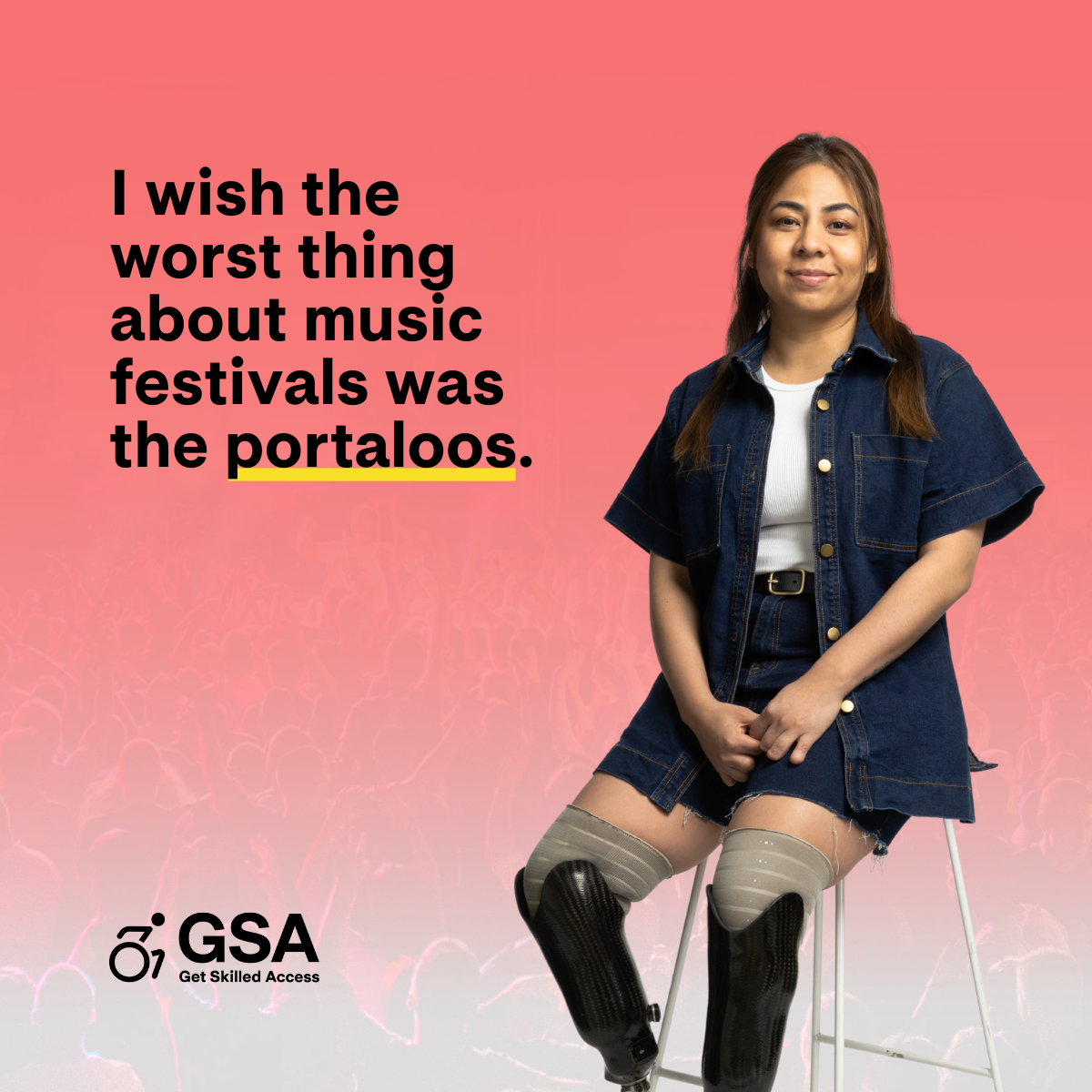
What if we were all complaining about the same things?
A burnt latte.
Bad hold music.
Middle seats on planes.
These are the things we love to complain about – the small annoyances we all share.
For millions of people with disability, the worst part of work, travel, shopping, and daily life isn’t the little inconveniences – it’s the barriers that make those experiences inaccessible, exclusionary, or just plain impossible.
It’s the beach that can’t be reached.
The accommodation that doesn’t accommodate.
Or missing a job interview because you couldn’t get into the building.
This isn’t about sympathy. It’s about equity. About creating a world where people with disability can just be.
Where they can participate, move, work, explore – and yes, complain about the same things as everyone else. Because when the only bad thing about something is the price of a coffee, we’ll know we’re getting somewhere.
Meet the people behind our campaign.
Seven lived experiences. Seven ways inclusion shows up in real life. Each story reminds us that accessibility isn’t about grand gestures – it’s about the small, everyday moments that make belonging possible.
Click to understand their stories and learn, in their own words, what it means to just be.
Oliver Hunter

Juttima Chinnasri

Celine Ramos

Elvin Lam

Maz Strong

Travis Zimmer

Paul Knox

About the Campaign
Just Be was created by people with lived experience of disability to spark a conversation about everyday accessibility. It’s a reminder that inclusion isn’t an ideal – it’s something we build through design, attitude, and action.
We’re not there yet, but every step toward access brings us closer to a world where we can all complain about the same things – and that’s something worth striving for.
Our Mission
Create a world where people with disability can just be
This is our north star.
Everything we do – from consulting and training to storytelling – our mission, helps make access and inclusion an everyday reality. Because when everyone can just be, that’s true inclusion.
At GSA, we help organisations, councils, and communities turn awareness into action – creating workplaces and environments where everyone can participate and belong.
If this message resonates with you, let’s discuss how we can make inclusion part of your everyday.
Have questions? We’re ready to help
Get in touch now
I understand that my data will be hold securely in accordance with the Privacy Policy